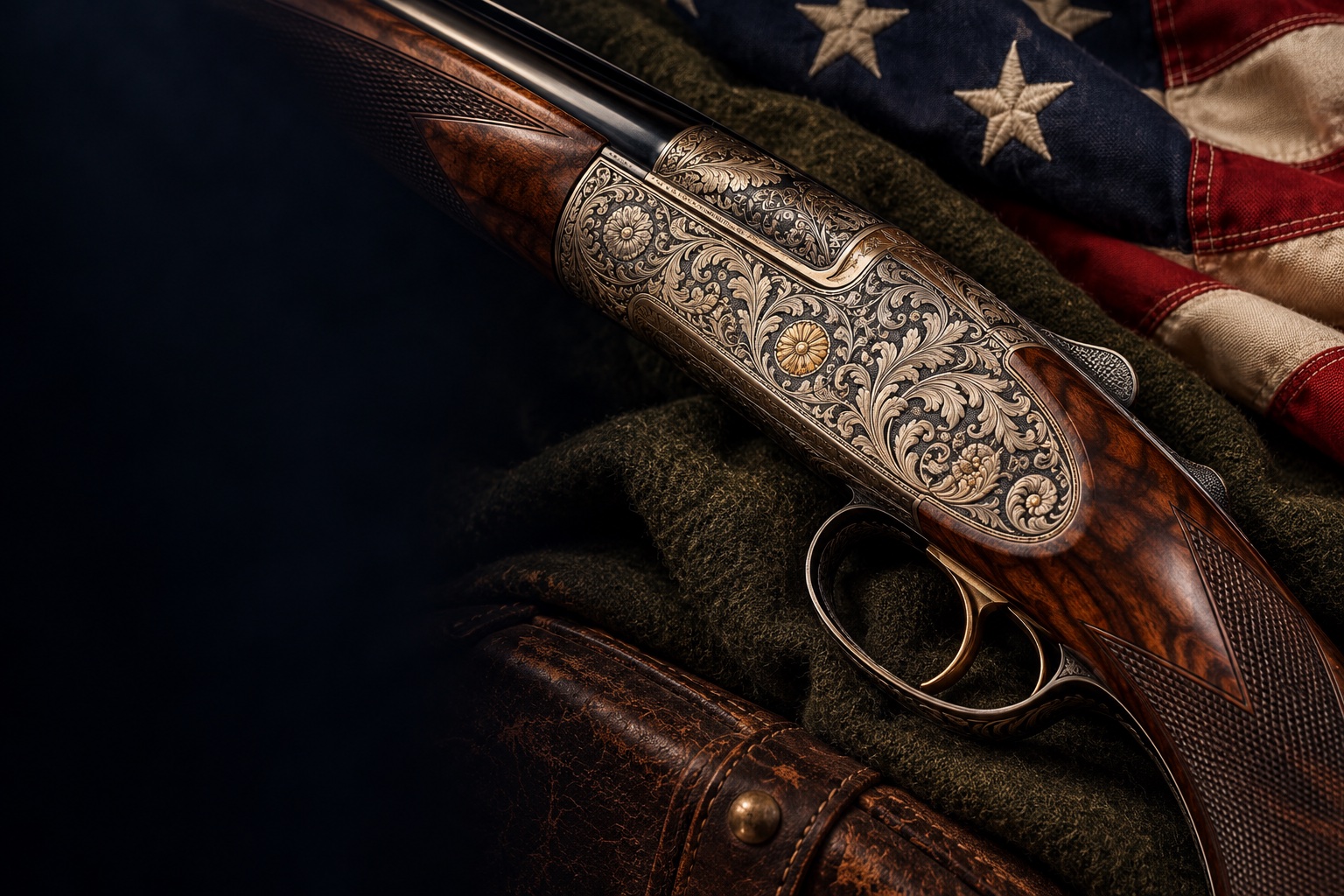
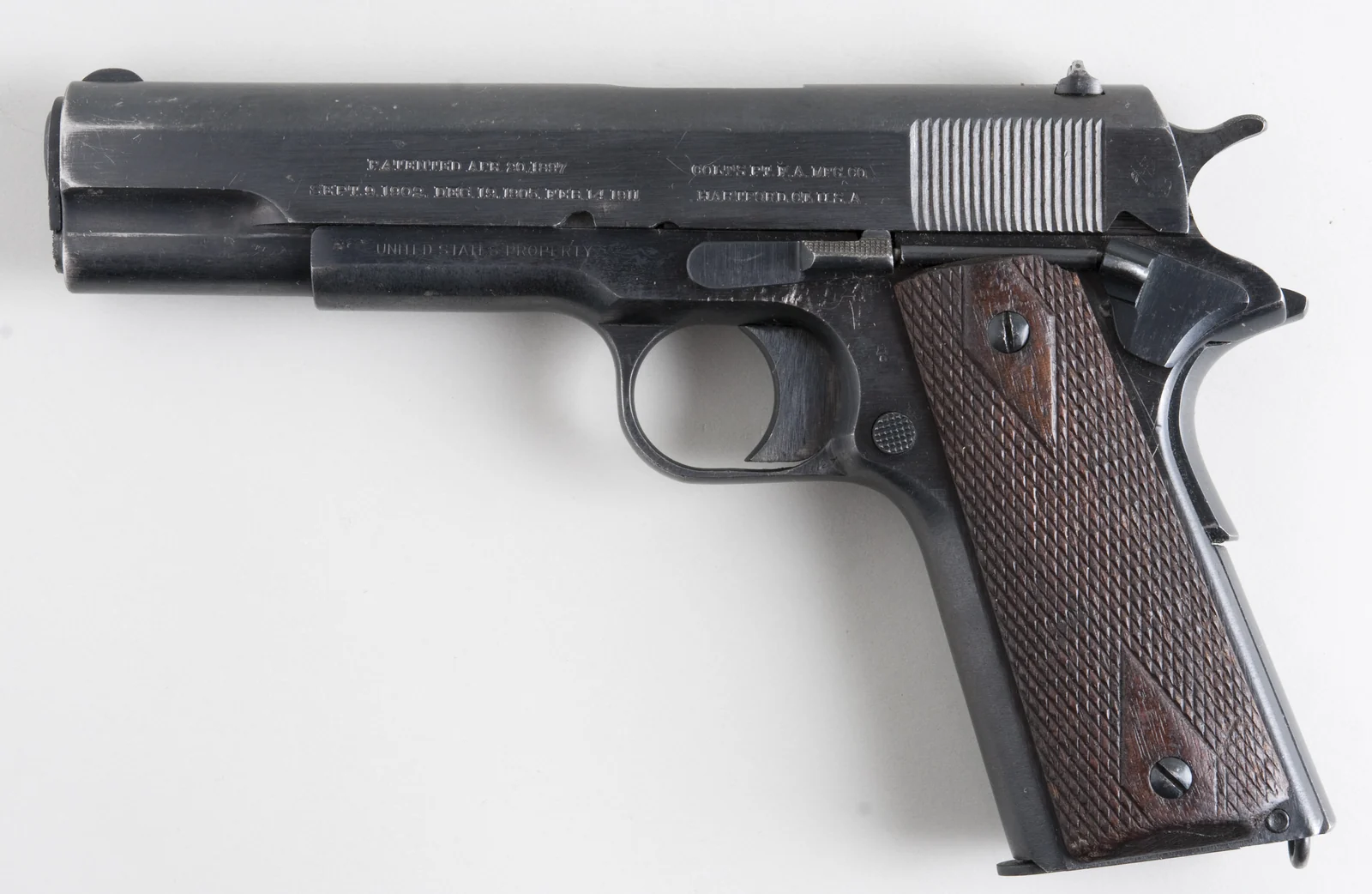
- Historical subject
- Colt M1911
- Milestone
- U.S. adoption · 1911
- Keep distinct
- M1911 / M1911A1
Research-only design profile. This is an editorial assessment of historical significance, not a hands-on test, product recommendation or performance rating.
One name, several histories
“1911” can describe an original military pistol, a later service variation, or a much broader design tradition. Those meanings overlap, but they are not interchangeable. A useful historical review starts by deciding which one it is discussing. Here, the subject is the Colt-produced U.S. Model 1911 and its continuing significance as a recognizable design reference—not a verdict on every product that now carries the name.
The distinction matters because a long-lived design accumulates stories. Military service, industrial production, individual ownership and later reinterpretations can become compressed into one reputation. Separating them does not diminish the object. It lets us ask more interesting questions about how a particular design becomes part of a shared visual language.
The official record behind the legend
The U.S. Army’s account of John M. Browning places adoption in March 1911. The Navy’s collection entry attributes the design to Browning and identifies an early Colt Navy example from 1912. It also distinguishes the original M1911 from the improved M1911A1, adopted in 1926. Those dates describe institutional milestones; they do not establish that every surviving example is unchanged or that every later derivative shares identical characteristics.
That is a useful boundary for any discussion of “a century of influence.” The phrase describes a historical lineage, not a century-long test conducted under consistent conditions. Service history can establish that an institution used a design. It cannot, by itself, answer a present-day question about an unspecified example’s condition, quality or suitability.
Look at the object, not only the outline
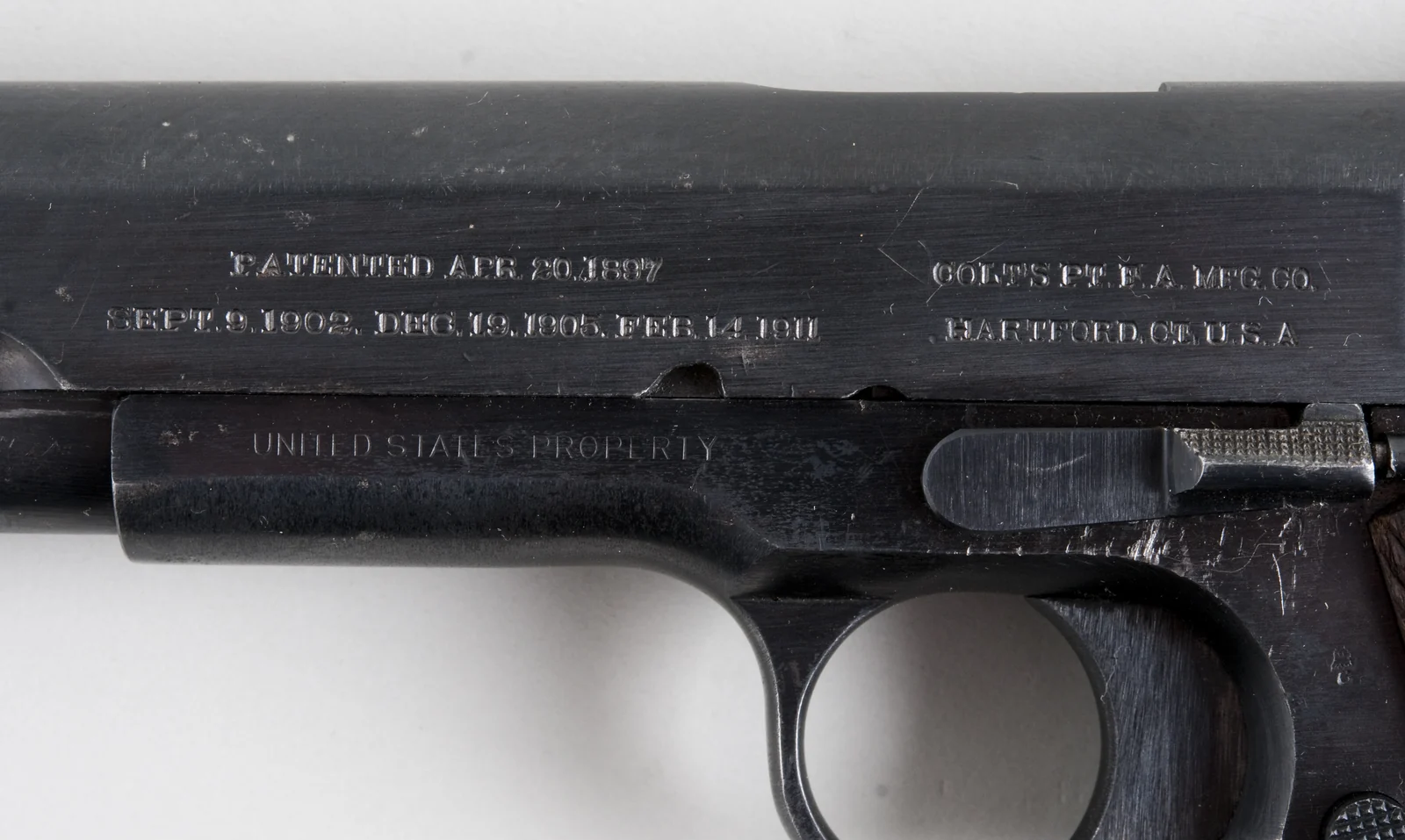
The Navy’s early specimen provides a more intimate kind of evidence. Its collection description records worn surfaces and mismatched grip panels: one walnut, one replacement plastic. The museum also notes uncertainty around refinishing. Such details interrupt the familiar idea of an immaculate icon. They suggest an object with a changing material history, while leaving some of that history unresolved.
For an editorial publication, this is where the subject becomes compelling. A silhouette makes an object recognizable; a collection record makes it particular. Wear, replacement and cataloguing decisions remind us that a historical firearm is an artifact with a biography. An attractive modern photograph cannot stand in for that biography, and a familiar model name cannot supply missing provenance.
Design influence is not a performance score
Our assessment is that the 1911 deserves attention because its name functions on several levels at once: as a military designation, as a reference to Browning’s work and as shorthand for a recognizable design family. That layered identity gives it editorial significance. It also creates a responsibility to be precise whenever the conversation moves from general history to an individual product.
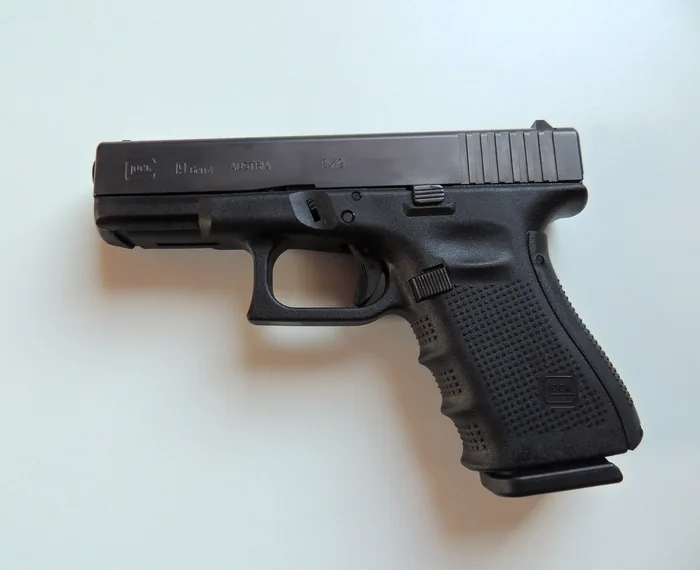
We would not transfer observations from a museum-held Colt to a contemporary pistol by another maker. Nor would we treat an M1911A1 as simply a different production date of an otherwise undifferentiated object. Model, manufacturer, period and documented alterations all belong in the description. They are the foundation of a fair comparison, even when no technical testing is involved.
Our considered view
The most rewarding way to read the 1911 is as a relationship between design continuity and material change. Its historical identity is strong enough to connect objects across generations, yet those objects retain their own stories. A collection label, an institutional adoption record and a manufacturer’s current description answer different questions. None should silently replace the others.
This profile therefore offers a judgment about historical interest: the 1911 is a valuable starting point for understanding how a service object becomes a cultural reference. It offers no reliability, accuracy or comparative quality verdict. Those claims would require a named specimen, a documented method and actual observations. Until that work exists, the history is substantial enough to deserve its own careful treatment.
How we approach evidence →